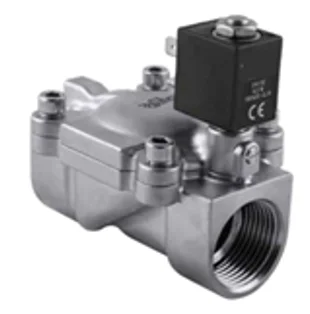
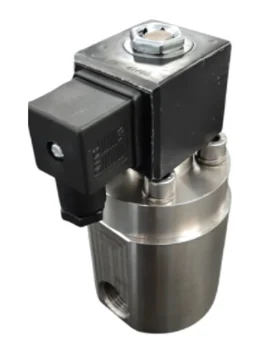
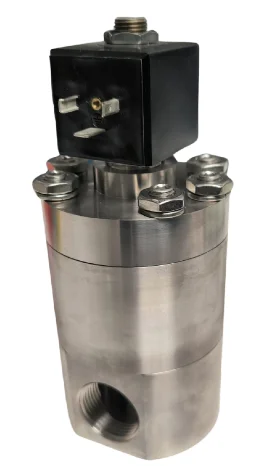
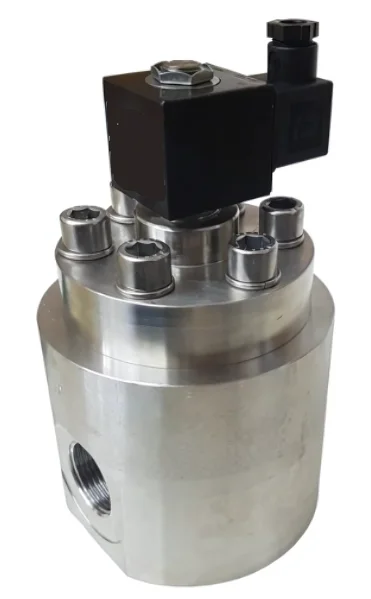
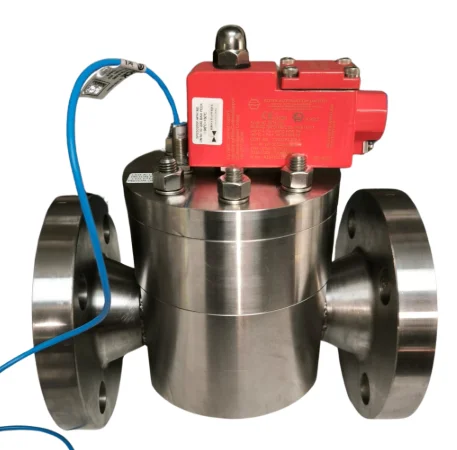
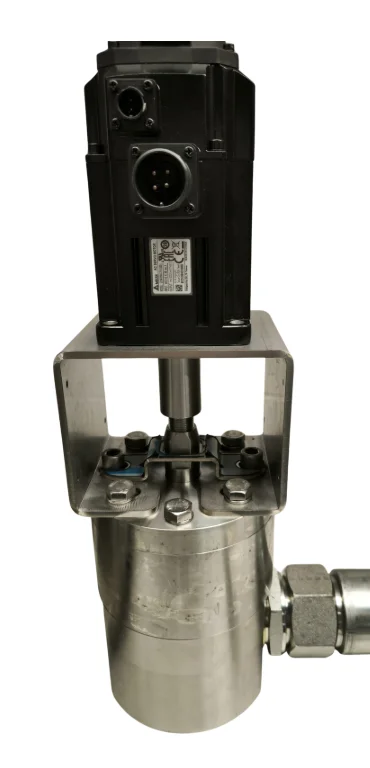
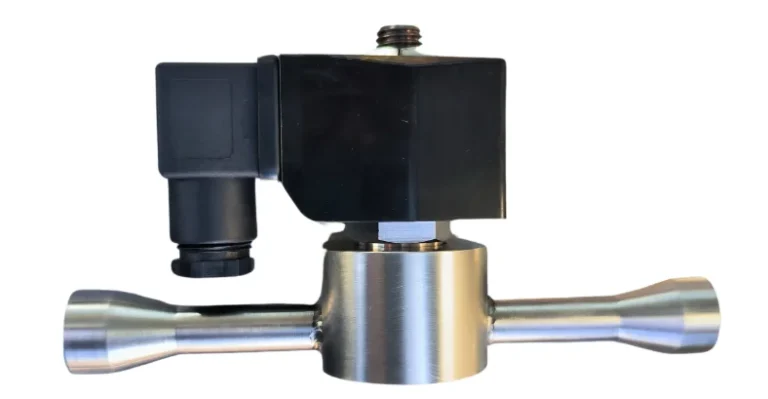
Stainless steel high-pressure solenoid valves

Tecflux offers 14 series of 2/2 stainless steel solenoid valves, from DN0.4 to DN300, up to 600 bar, for air, water, gas, hydrogen and nitrogen. Beyond the catalogue, we design and manufacture specific solenoid valves, custom-made up to 1000 bar.

How to choose a solenoid valve

The 14 solenoid valve series

2/2 stainless steel solenoid valves, normally closed (NC) or normally open (NO), direct acting or pilot operated. Options depending on the series: ATEX, bistable, position detector, NPT connections, flanges, manual opening.

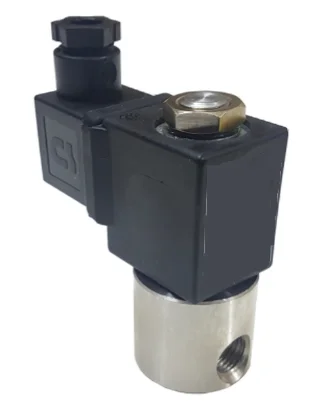
TECBPi021 stainless steel solenoid valve

Series

TECBPi021

Stainless steel solenoid valves 2/2 NC
direct acting

Connections and DN

1/8G – 1/4G
DN1 to DN5

Pressure

0-150 bar

Fluids

  • Air
  • Water
  • Gas
  • Fuels
  • Hydrogen, helium
  • Nitrogen

Options

  • Atex
  • Bistable
  • NPT
  • Position detector
Direct acting stainless steel solenoid valve

Series

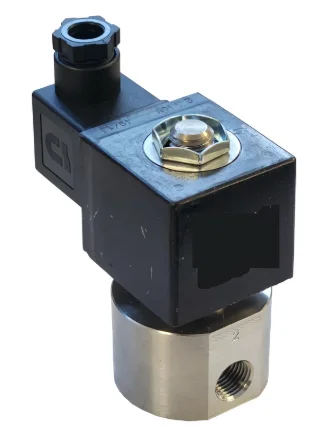
TECHPi022

Stainless steel solenoid valves 2/2 NC-NO
direct acting

Connections and DN

1/8G – 1/4G
DN0.4 to DN1.2

Pressure

0-600 bar

Fluids

  • Air
  • Water
  • Gas
  • Fuels
  • Hydrogen, helium
  • Nitrogen

Options

  • Atex
  • Bistable
  • NPT
  • Manual opening
  • Position detector
Direct acting stainless steel solenoid valve

Series

TECHPCRYO

Stainless steel solenoid valves 2/2 NC
direct acting

Connections and DN

1/8G – 1/4G
DN0.4 to DN1.2

Pressure

0-200 bar

Fluids

  • Nitrogen -196°C

Options

  • NPT
  • Manual opening
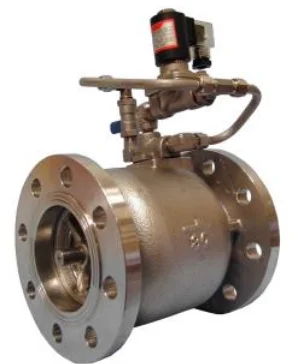
TECBFE flanged stainless steel solenoid valve

Series

TECBFE

Stainless steel solenoid valves 2/2 NC-NO
pilot operated

Connections and DN

Flanges
DN50 to DN300

Pressure

0.7-10 bar

Fluids

  • Air
  • Water
  • Gas
  • Fuels
  • Hydrogen
  • Nitrogen

Options

—

TECBPiADS stainless steel solenoid valve

Series

TECBPiADS

Stainless steel solenoid valves 2/2 NC
pilot operated, coupled

Connections and DN

3/8G to 2G
DN15 to DN50

Pressure

0-10 bar

Fluids

  • Air
  • Water
  • Gas
  • Fuels
  • Hydrogen
  • Nitrogen

Options

  • Atex
  • Bistable
  • NPT
  • Position detector
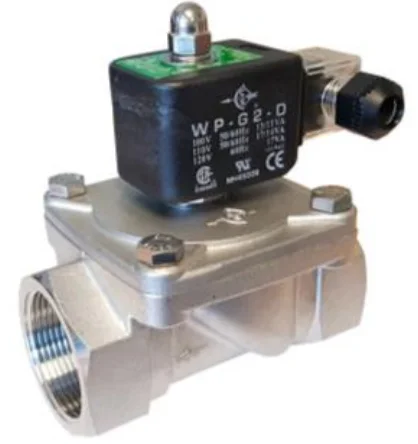
TECBPi024 stainless steel solenoid valve

Series

TECBPi024

Stainless steel solenoid valves 2/2 NC-NO
pilot operated

Connections and DN

1/4G to 2G
DN10 to DN50

Pressure

0.15-25 bar

Fluids

  • Air
  • Water
  • Gas
  • Fuels
  • Hydrogen

Options

  • Atex
  • Bistable
  • NPT
  • Manual opening
  • Position detector
Direct acting stainless steel solenoid valve

Series

TECHPi006

Stainless steel solenoid valves 2/2 NC-NO
pilot operated

Connections and DN

1/8G to 1/4G
DN6

Pressure

1-400 bar

Fluids

  • Air
  • Water
  • Gas
  • Fuels
  • Hydrogen, helium
  • Nitrogen

Options

  • Atex
  • Bistable
  • NPT
  • Manual opening
  • Position detector
TECHPi008 stainless steel solenoid valve

Series

TECHPi008

Stainless steel solenoid valves 2/2 NC-NO
pilot operated

Connections and DN

1/4G to 1/2G
DN8

Pressure

1-350 bar

Fluids

  • Air
  • Water
  • Gas
  • Fuels
  • Hydrogen
  • Nitrogen

Options

  • Atex
  • Bistable
  • NPT
  • Flanges
  • Manual opening
  • Position detector
DN15 400 bar solenoid valve

Series

SPE12X00

Stainless steel solenoid valves 2/2 NC-NO
pilot operated

Connections and DN

3/8G to 1/2G
DN12

Pressure

10-400 bar

Fluids

  • Air
  • Water
  • Gas
  • Fuels
  • Hydrogen
  • Nitrogen
  • Cryogenics

Options

  • Atex
  • Bistable
  • NPT
  • Flanges
  • Manual opening
  • Position detector
DN15 400 bar solenoid valve

Series

SPE15X00

Stainless steel solenoid valves 2/2 NC-NO
pilot operated

Connections and DN

1/2 to 3/4G
DN15

Pressure

10-400 bar

Fluids

  • Air
  • Water
  • Gas
  • Fuels
  • Hydrogen
  • Nitrogen
  • Cryogenics

Options

  • Atex
  • Bistable
  • NPT
  • Flanges
  • Manual opening
  • Position detector
DN15 400 bar solenoid valve

Series

SPE20X00

Stainless steel solenoid valves 2/2 NC-NO
pilot operated

Connections and DN

3/4G
DN20

Pressure

10-400 bar

Fluids

  • Air
  • Water
  • Gas
  • Fuels
  • Hydrogen
  • Nitrogen
  • Cryogenics

Options

  • Atex
  • Bistable
  • NPT
  • Flanges
  • Manual opening
  • Position detector
DN15 400 bar solenoid valve

Series

SPE25X00

Stainless steel solenoid valves 2/2 NC-NO
pilot operated

Connections and DN

1G
DN25

Pressure

10-400 bar

Fluids

  • Air
  • Water
  • Gas
  • Fuels
  • Hydrogen
  • Nitrogen
  • Cryogenics

Options

  • Atex
  • Bistable
  • NPT
  • Flanges
  • Manual opening
  • Position detector
SPE40X00 and SPE50X00 stainless steel solenoid valves

Series

SPE40X00

Stainless steel solenoid valves 2/2 NC-NO
pilot operated

Connections and DN

1 1/4G to 1 1/2G
DN40

Pressure

10-200 bar

Fluids

  • Air
  • Water
  • Gas
  • Fuels
  • Hydrogen
  • Nitrogen
  • Cryogenics

Options

  • Atex
  • Bistable
  • NPT
  • Manual opening
  • Position detector
SPE40X00 and SPE50X00 stainless steel solenoid valves

Series

SPE50X00

Stainless steel solenoid valves 2/2 NC-NO
pilot operated

Connections and DN

2G
DN50

Pressure

10-200 bar

Fluids

  • Air
  • Water
  • Gas
  • Fuels
  • Hydrogen
  • Nitrogen
  • Cryogenics

Options

  • Atex
  • Bistable
  • NPT
  • Flanges
  • Manual opening
  • Position detector

Series

TECHPi020

Stainless steel solenoid valves 2/2 NC-NO
pilot operated

Connections and DN

3/4G
DN20

Pressure

1-300 bar

Fluids

  • Air
  • Water
  • Gas
  • Fuels
  • Hydrogen
  • Nitrogen

Options

  • Atex
  • Bistable
  • NPT
  • Manual opening
  • Position detector

Series

TECHPi025

Stainless steel solenoid valves 2/2 NC-NO
pilot operated

Connections and DN

1G
DN25

Pressure

1-300 bar

Fluids

  • Air
  • Water
  • Gas
  • Fuels
  • Hydrogen
  • Nitrogen

Options

  • Atex
  • Bistable
  • NPT
  • Manual opening
  • Position detector

Other models, functions and options on request

DN50 solenoid valve, 200 bar, ATEX versionOther Tecflux solenoid valve modelsOther Tecflux solenoid valve models

To correctly define a solenoid valve

Learn how to define a solenoid valve by considering factors such as fluid type, pressure range, temperature, voltage, flow rate and environmental conditions. Explore the characteristics in detail.

To correctly define a solenoid valve, it is necessary to know its exact application:

  • the type of fluid (air, nitrogen, hydrogen, cryogenics, etc.)
  • the pressure range
  • the temperature range
  • voltage
  • the flow
  • the ATEX environment, confinement, size and space constraints

These elements make it possible to determine the characteristics below:

  • the type of elastomer
  • the type of solenoid valve depending on the pressure
  • the type of coil according to pressure and temperature
  • the passage diameter defined by the calculation of the resulting flow/pressure Kv

Determine the control function of the solenoid valve several cases exist:

  • 2-way normally closed – 1 inlet/1 outlet solenoid valve, lets the fluid through when energised.
  • 2-way normally open – 1 inlet/1 outlet solenoid valve, lets the fluid through when not energised, generally used as a discharge safety device during a power voltage.
  • 3-way normally closed – 1 inlet/1 outlet/1 exhaust solenoid valve, lets the fluid through when energised, then releases the downstream chamber when not energised. Example of use: cylinder control.
  • 3-way normally open – 1 inlet/1 outlet/1 exhaust solenoid valve, lets the fluid through downstream when not energised and supplies the process when energised. This case is also often used as a safety function.
  • 3-way universal – solenoid valve integrating normally closed and open functions.
  • 3-way selector – solenoid valve allowing the fluid to be directed upstream towards one line to another depending on the open or closed position.

The different technologies:

  • Direct control: this typology is mainly used for small diameters up to 7mm. Only the moving core inside the solenoid valve is driven. No pressure difference is necessary for its operation.
  • Assisted control: this type allows, compared to the version above, to obtain equipment with large passages and high pressures, example: DN20 300 bar but requires a pressure difference between the inlet and outlet. When controlling the mobile core, the latter releases the pressure from the chamber above the piston, allowing the latter to open. And when the core closes, the pressure is applied again.

For any technical questions or observations, our teams are at your disposal contact@tecflux.fr

Scroll to Top